In this guide, we’ll cover:
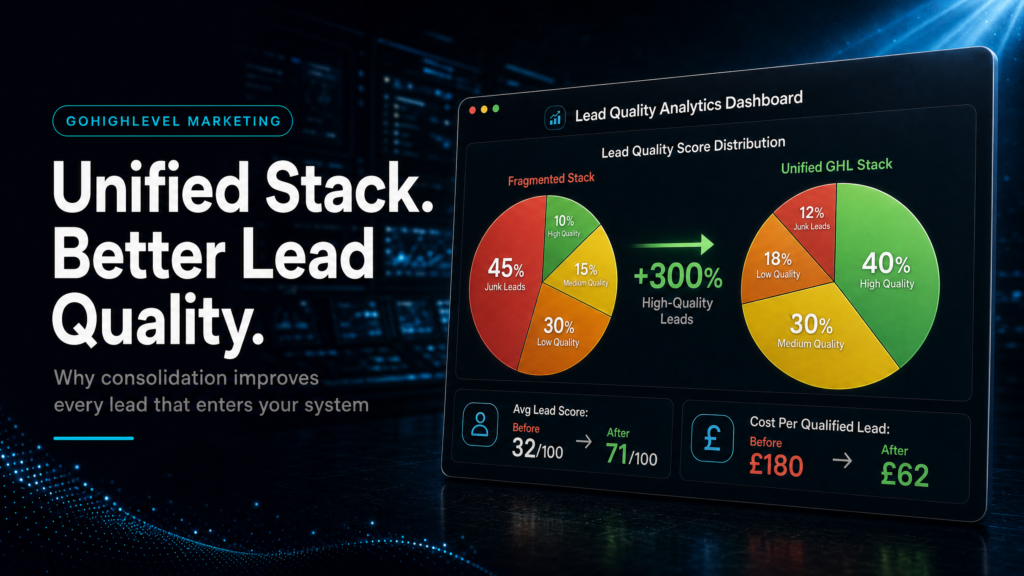
Why a GoHighLevel unified stack can improve local lead quality by connecting capture, routing, booking, follow-up and attribution in one revenue system.
Stop Splitting New Enquiries
Forms, calls, DMs and ads should land in one CRM record with the source preserved.
Separate Good Leads From Noise
Lead quality improves when the system records service need, urgency, location and next action.
Move Qualified Leads Faster
Routing, reminders and calendar flow should help the team book better prospects before they go cold.
See Which Leads Convert
Connect source, pipeline stage, booking, show rate and revenue so the business can improve the lead path.
Quick Answer
A GoHighLevel unified stack improves local lead quality because every enquiry moves through the same capture, routing, booking, follow-up and reporting path. The business can see which leads are real opportunities and which sources create poor-fit enquiries.
This support page strengthens the GoHighLevel marketing automation lead tracking cluster because lead quality only improves when source and pipeline data are visible.
TL;DR
- Lead quality suffers when ads, forms, calls, DMs, CRM and calendars live in separate tools.
- GoHighLevel should preserve the original lead source and route every enquiry into one pipeline.
- Qualification improves when the system captures need, urgency, location and next action.
- Follow-up should support fast human response, not hide weak enquiries behind automation.
- The real test is whether source, booking, show rate and revenue are visible together.
Unified Stack Checklist For Better Lead Quality
| Layer | What Must Be Unified | Quality Signal |
|---|---|---|
| Traffic source | Ads, search, referral and social enquiries keep source data. | You can see which channel brings qualified leads. |
| Lead capture | Forms, calls, chat and DMs create one contact record. | Duplicate, missed and anonymous leads reduce. |
| CRM routing | Each enquiry receives owner, stage and next task. | Qualified leads move before competitors respond. |
| Booking flow | Calendar, reminders and confirmations connect to the pipeline. | Better-fit leads show up more often. |
| Attribution | Source, booking, show rate and revenue sit in one report. | The business can scale channels that create customers. |
Why Split Tools Create Lower-Quality Leads
Local businesses often blame lead quality when the real problem is visibility. If the form tool, phone system, calendar, CRM and follow-up messages are separate, the team cannot see the full journey.
As a result, weak leads and strong leads can look the same. A unified GoHighLevel stack gives each enquiry one record, one source, one next action and one reporting path.
Preserve The Original Lead Source
Lead quality starts with source data. The business needs to know whether a booking came from Google, Facebook, referral, retargeting or a returning visitor.
When source data follows the contact into the CRM, the team can compare lead quality by channel. That is more useful than counting total enquiries without context.
Route Qualified Leads Into A Clear Pipeline
A unified stack should move good-fit enquiries into a simple sales pipeline. The stages do not need to be complex; they need to show whether the lead is new, contacted, booked, showed, won or lost.
That structure helps the team prioritise better prospects. It also gives the owner a clean view of where quality drops: source, response, booking, show rate or close rate.
Use Follow-Up To Protect Good Leads
Automation should protect qualified enquiries from slow response. It can send confirmations, reminders and missed-call recovery while still making space for a person to take over.
However, automation should not make every lead look valuable. Strong GoHighLevel setup keeps the quality signals visible so poor-fit enquiries do not consume the whole team.
Report On Revenue, Not Just Lead Count
The final test is whether the stack shows which leads became booked calls, showed appointments and revenue. That is how local businesses decide where to spend more and what to fix next.
SCALE builds the stack around that full path. The aim is not more software; it is clearer source-to-revenue visibility and a faster handoff for leads worth pursuing.
Conclusion
A GoHighLevel unified stack improves local lead quality by connecting the entire revenue path. The business can capture the source, route the lead, support follow-up, book the appointment and see which enquiries became revenue.
If your local business is getting leads but struggling to judge quality, fix the stack before adding more traffic. Better visibility makes every next decision cleaner.
FAQs
How does GoHighLevel improve local lead quality?
It improves lead quality by keeping source, contact record, pipeline stage, booking activity and follow-up in one place. That makes it easier to see which enquiries are worth prioritising.
Does a unified stack create more leads?
Not by itself. It helps the business respond faster, qualify better and understand which sources produce better appointments and customers.
What should be unified first?
Start with source tracking, form and call capture, CRM routing, calendar booking, reminders and revenue reporting. Those layers usually reveal the biggest lead-quality gaps.
