
GoHighLevel implementation cost is rarely just the price of the build. The real cost is what happens when the CRM, funnel, automation and reporting are installed cheaply but cannot support paid traffic, booked calls, sales ownership or attribution.
This cost guide supports the main GoHighLevel implementation hub. Use the hub to map the full migration and setup path, then use this article to decide whether outsourcing the build saves more than it costs.
SCALE builds GoHighLevel CRM, funnel and automation systems for businesses that need better lead quality, faster follow-up and clearer attribution.
In this guide, we’ll cover:
A commercial way to compare GoHighLevel implementation cost, DIY risk, specialist outsourcing and the revenue leakage that weak setup can create.
Cost Depends On What The System Must Carry
Why a simple snapshot is different from a revenue system with paid traffic, sales reps, attribution and handover.
The Cheapest Build Can Create The Highest Cost
Where fragile setup leaks money: missed speed-to-lead, broken owner rules, duplicate workflows and unclear source data.
Outsourcing Should Reduce Operating Risk
How a specialist build pays back when sales can respond faster and owners can see which campaigns deserve budget.
The Right Route Depends On Revenue Exposure
What to choose before you buy: DIY for small tests, guided setup for learning, or DFY build when leakage costs more.
“The right GoHighLevel implementation cost is the number that protects revenue, not the number that makes the invoice look small.”
Quick Answer
GoHighLevel implementation cost depends on scope, complexity and revenue risk. A simple DIY setup can be cheap, but a business using paid traffic, booked calls, automations, multiple reps or attribution usually needs a specialist build. Outsourcing costs more upfront, but it can reduce missed leads, rework and reporting confusion.
TL;DR
- Do not compare GoHighLevel implementation by setup fee alone.
- Low-cost builds often miss routing, attribution, QA and handover.
- DIY works for small tests and simple offers.
- Outsourcing makes sense when missed leads or unclear reporting can cost revenue.
- The best route depends on lead volume, sales process, offer value and internal capability.
Decision Table: DIY Vs Outsourced GoHighLevel Implementation
Use this table to decide whether the implementation should be handled internally, guided or built by a specialist.
| Route | Best Fit | Main Risk | Better Next Step |
|---|---|---|---|
| DIY setup | One offer, low lead volume, founder-led sales. | Slow QA, missed edge cases and weak reporting. | Use a narrow checklist and keep scope small. |
| Template or snapshot | Basic nurture, one calendar, limited traffic. | Looks finished but misses ownership, source and stop rules. | Ask for proof of pipeline mapping and handover. |
| Guided setup | Founder wants to learn the platform before outsourcing. | Progress depends on internal time and technical confidence. | Use official GoHighLevel resources and test every path. |
| Specialist DFY build | Paid traffic, high-ticket sales, multiple sources or reps. | Higher upfront cost, but lower operating risk. | Book a Growth Systems Audit before build scope is agreed. |
 Related Read
What Actually Drives GoHighLevel Implementation Cost?
The cost changes when the build moves from basic software setup into revenue infrastructure. A simple account might need a funnel, one pipeline and a few messages. However, a serious sales system needs clean fields, source tracking, booking logic, missed-call handling, rep assignment, reporting and handover documentation.
That extra work is not decoration. It is what makes the system usable after launch. If a paid campaign sends leads into a broken pipeline, the business pays for the ad click, the missed follow-up and the later rebuild.
Where Cheap Builds Usually Become Expensive
Cheap implementation tends to fail in the places that are least visible at the start. For example, the page can look finished while hidden fields are missing. The workflow can send messages while stop conditions are wrong. The pipeline can show deals while source data is missing.
These problems usually appear after traffic starts. Therefore, the cost of fixing them includes lost leads, confused sales reps, duplicated contacts, missed appointments and reporting that cannot guide decisions.
Cost Drivers To Check Before You Choose A Builder
| Cost Driver | Why It Matters | Low-Risk Evidence | Revenue Impact |
|---|---|---|---|
| Lead Source Tracking | Shows which campaigns create bookings. | UTM fields survive into opportunities. | Better budget decisions. |
| Routing Logic | Controls who owns each lead. | Owner assignment is tested by source and service. | Faster first response. |
| Automation QA | Prevents awkward or duplicate messages. | Stop rules work after reply, booking or stage change. | Lower opt-outs and complaints. |
| Reporting | Connects activity to revenue. | Dashboard shows booked calls, show rate and close movement. | Clearer scale decisions. |
When Outsourcing Saves More Than It Costs
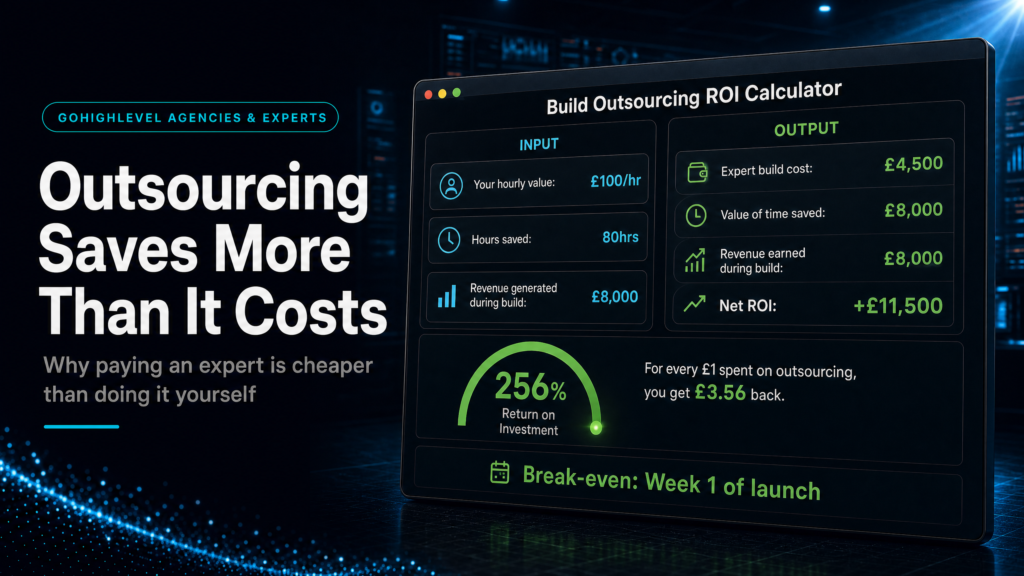
Outsourcing makes commercial sense when the downside of poor setup is higher than the build fee. If one extra booked call can cover a meaningful part of the project, then cleaner speed-to-lead, stronger routing and better attribution matter more than saving a small amount upfront.
This is especially true for local service businesses, high-ticket offers, agencies and operators running paid traffic. In those cases, GoHighLevel is not just a CRM. It becomes the operating layer that turns attention into pipeline.
If your first concern is understanding the platform, the affiliate path can still be useful. Start with official GoHighLevel resources, test the product, then decide whether your build needs a specialist. If your concern is revenue leakage, use a GoHighLevel expert checklist before signing.
Conclusion:
GoHighLevel implementation cost should be judged against operating risk. A cheap build is fine for simple tests. However, if the system affects paid traffic, speed-to-lead, sales ownership, booked calls or attribution, the better question is whether the setup can protect revenue after launch.
Want to learn more?
Watch the video below:
Ready To Choose The Right Build Route?
If implementation cost is really a question about revenue risk, choose the path that matches how much you want to build yourself.
Done For You
SCALE can audit your CRM, funnel and follow-up path, then show where leads, bookings and attribution are leaking.
Book A Growth Systems AuditDo It Yourself
Want to test GoHighLevel first? Start through SCALE’s path and use the upcoming setup resource before hiring.
Try GoHighLevelDisclosure: We may earn a commission if you sign up through the GoHighLevel link. It does not increase your price.
FAQs
How much does GoHighLevel implementation cost?
The cost depends on scope. Simple DIY setup is cheaper, while specialist implementation costs more because it includes routing, automation QA, attribution, reporting and handover.
Is outsourcing GoHighLevel implementation worth it?
It is worth considering when missed leads, poor follow-up, broken attribution or weak reporting can affect revenue.
Can I start with DIY and outsource later?
Yes. That can work for learning the platform, but the account may still need cleanup before it can support serious paid traffic or sales operations.
What should I ask before paying for implementation?
Ask how the builder maps lead sources, ownership rules, pipeline stages, automation stop conditions, reporting and post-launch QA.
