In today’s competitive digital landscape, marketing agencies face an increasingly challenging environment. While they excel at creating campaigns for clients, many struggle to generate consistent leads and revenue for their own businesses. The secret weapon that separates thriving agencies from those barely surviving? A well-structured sales funnel.
When a marketing agency funnel starts depending on CRM ownership, fast follow-up and sales visibility, compare whether you need a done-for-you funnel build partner before bringing in a GoHighLevel automation expert to turn the funnel into a measurable operating system.
Understanding the Sales Funnel for Marketing Agencies
A sales funnel is a systematic approach to converting prospects into paying clients through a series of strategic touchpoints. For marketing agencies, this isn’t just a nice-to-have tool—it’s an essential framework that transforms how you attract, nurture, and close deals with potential clients.
Unlike sporadic marketing efforts, a sales funnel creates predictability in your business growth. It allows you to understand exactly where prospects are in their buying journey and what actions to take to move them forward.
If you want the direct commercial answer before investing more in disconnected tactics, read whether a marketing agency sales funnel will actually grow your business and what separates growth from extra complexity.
Why Marketing Agencies Struggle Without a Sales Funnel
Many marketing agencies operate on a feast-or-famine cycle. One month they’re overwhelmed with clients, the next they’re scrambling to find new business. This inconsistency stems from a common problem: the absence of a structured lead generation and conversion system.
Without a sales funnel, agencies typically experience:
- Unpredictable revenue streams and cash flow issues
- Heavy reliance on referrals and word-of-mouth alone
- Difficulty scaling beyond the founder’s personal network
- Wasted marketing budget on unqualified leads
- Inconsistent client acquisition and retention rates
The Key Benefits of Implementing a Sales Funnel
Automated Lead Generation
A properly designed sales funnel works for your agency 24/7, attracting and qualifying prospects even while you sleep. Through content marketing, paid advertising, and strategic lead magnets, your funnel continuously fills your pipeline with potential clients who are genuinely interested in your services.
Improved Lead Quality
Not all leads are created equal. A sales funnel includes qualification mechanisms that filter out tire-kickers and attract your ideal client profile. This means your sales team spends time talking to prospects who are more likely to convert, improving efficiency and closing rates.
Scalable Growth
Once your sales funnel is optimized, scaling becomes a matter of increasing inputs. You can predictably calculate that X amount of ad spend will generate Y number of qualified leads, which will convert to Z new clients. This data-driven approach removes guesswork from your growth strategy.
Enhanced Client Experience
A well-crafted sales funnel provides value at every stage of the customer journey. From educational content that addresses pain points to personalized follow-ups that build trust, your prospects experience a seamless, professional journey that reflects the quality of your agency’s work.
Essential Components of a Marketing Agency Sales Funnel
Building an effective sales funnel requires several interconnected components working in harmony:
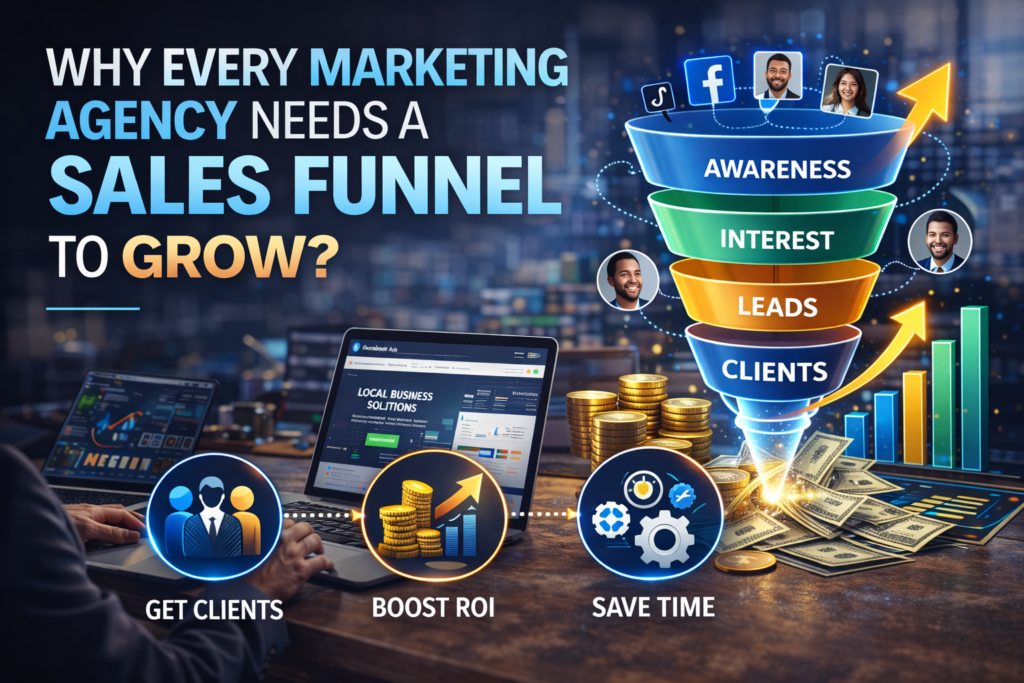
- Awareness Stage: Attract potential clients through SEO, content marketing, social media, and paid advertising that showcases your expertise and addresses their challenges.
- Interest Stage: Provide valuable resources like free guides, webinars, or case studies in exchange for contact information, building your email list with qualified prospects.
- Consideration Stage: Nurture leads with targeted email sequences, testimonials, and detailed service information that demonstrates your unique value proposition.
- Decision Stage: Present clear calls-to-action, offer consultations or audits, and remove barriers to purchase with transparent pricing and straightforward onboarding processes.
- Retention Stage: Delight existing clients with exceptional service and strategic upsells, turning them into long-term partners and referral sources.
Common Sales Funnel Mistakes to Avoid
Even agencies that recognize the importance of sales funnels often make critical errors that undermine their effectiveness. Avoid these common pitfalls:
First, don’t create a one-size-fits-all funnel. Different client segments may require different messaging and touchpoints. Segment your audience and create tailored funnel experiences for each group.
Second, never neglect the follow-up process. Studies show that most sales require multiple touchpoints before conversion, yet many agencies give up after one or two attempts. Implement automated nurture sequences that stay in touch with prospects over time.
Third, avoid the mistake of building your funnel on rented land alone. While social media platforms are valuable, you should own your primary funnel assets—particularly your email list and website.
Measuring Sales Funnel Success
What gets measured gets improved. To optimize your agency’s sales funnel, track these critical metrics:
- Conversion rates at each funnel stage
- Cost per lead and cost per acquisition
- Average time to close deals
- Customer lifetime value
- Email open rates and click-through rates
- Return on ad spend (ROAS)
Regularly analyze these metrics to identify bottlenecks and opportunities for improvement. Even small optimization tweaks can compound into significant revenue increases over time.
Getting Started: Your Sales Funnel Action Plan
Ready to implement a sales funnel for your marketing agency? Follow this action plan:
Start by clearly defining your ideal client profile. Understand their pain points, goals, budget range, and decision-making process. This clarity will inform every aspect of your funnel design.
Next, audit your existing marketing assets. What content, landing pages, and email sequences do you already have? What gaps need to be filled? Create a content calendar that addresses each stage of your buyer’s journey.
Then, select your funnel technology stack. Tools like CRM systems, email marketing platforms, and landing page builders will automate much of your funnel operations. Choose solutions that integrate well together and match your budget.
Finally, launch a minimum viable funnel rather than waiting for perfection. Start with one primary traffic source, one lead magnet, and one nurture sequence. Test, measure, optimize, and expand from there.
Conclusion
The question isn’t whether your marketing agency needs a sales funnel—it’s how quickly you can implement one. In an industry where competition intensifies daily, agencies with systematic lead generation and conversion processes will consistently outperform those relying on luck and referrals alone.
A sales funnel transforms your agency from a service provider constantly chasing clients to a business with predictable growth and sustainable revenue. It allows you to demonstrate the same strategic thinking and results-focused approach for your own business that you promise your clients.
The time to build your agency’s sales funnel is now. Start small, test continuously, and scale what works. Your future self—and your bank account—will thank you for taking this essential step toward long-term growth and stability.
Want us to set this up for your business?
Book a FREE call with us to see how we can help by visiting: https://scale-agency.co/
Learn more below:
