In today’s digital marketplace, Facebook remains one of the most powerful platforms for generating leads and converting customers. With over 2.9 billion active users, the potential to reach your ideal audience is enormous. However, simply posting content isn’t enough—you need a strategic Facebook sales funnel that systematically guides prospects from awareness to purchase. This comprehensive guide will show you how to build high-converting sales funnels on Facebook that consistently deliver leads and customers to your business.
For the CRM, automation and attribution layer behind the Facebook funnel, use the GoHighLevel expert checklist before you hand the build to a freelancer, template setup or consultant.
Understanding the Facebook Sales Funnel Framework
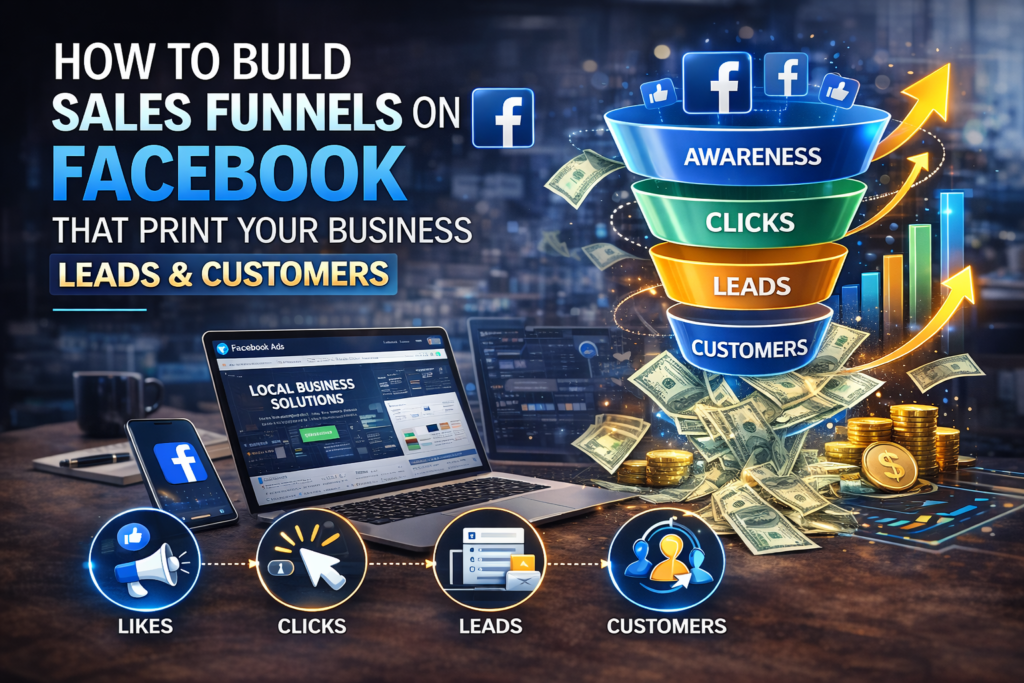
A Facebook sales funnel is a strategic pathway that moves potential customers through different stages of the buying journey. Unlike traditional marketing, a well-designed funnel automates the process of attracting, engaging, and converting your audience. The typical Facebook sales funnel consists of three main stages:
At the top of the funnel (TOFU), you’re creating awareness and attracting cold traffic. The middle of the funnel (MOFU) focuses on engagement and nurturing relationships. Finally, the bottom of the funnel (BOFU) is where you convert warm leads into paying customers. Understanding this framework is crucial because it allows you to create targeted content and ads for each stage, maximizing your conversion rates at every step.
Setting Up Your Facebook Business Assets
Before building your sales funnel, you need the right foundation. Start by ensuring you have a Facebook Business Page that’s fully optimized with professional branding, a clear value proposition, and complete contact information. Next, set up Facebook Business Manager—this centralized hub gives you control over your pages, ad accounts, and team members.
You’ll also need to install the Facebook Pixel on your website. This powerful tracking tool monitors visitor behavior, allowing you to retarget website visitors and measure the effectiveness of your ads. Additionally, create custom audiences based on your existing customer data, website visitors, and engagement with your Facebook content. These assets form the technical infrastructure that makes sophisticated funnel strategies possible.
Creating Awareness: Top of Funnel Content Strategy
The awareness stage is where you introduce your brand to people who’ve never heard of you. Your content at this stage should focus on providing value, solving problems, and capturing attention—not making hard sales pitches. Video content performs exceptionally well for awareness campaigns, with Facebook’s algorithm favoring engaging video posts.
Consider creating educational content, entertaining posts, inspirational stories, or industry insights that resonate with your target audience. Use Facebook ads with broad targeting to reach new people who match your ideal customer profile. The goal here isn’t immediate conversion but rather to get your brand on people’s radar and start building trust.
Essential Components of a High-Converting Facebook Funnel
To maximize results, your Facebook sales funnel should include these critical elements:
- Lead magnet: A valuable free offer (ebook, checklist, webinar, discount) that incentivizes people to share their contact information
- Landing pages: Dedicated pages with focused messaging and clear calls-to-action that reduce distractions and increase conversions
- Facebook Lead Ads: Native forms that capture leads without requiring users to leave Facebook, reducing friction in the conversion process
- Email automation: Follow-up sequences that nurture leads and guide them toward a purchase decision
- Retargeting campaigns: Ads that remind interested prospects about your offer and address potential objections
- Messenger chatbots: Automated conversations that qualify leads, answer questions, and move prospects through your funnel
Step-by-Step Process to Build Your Facebook Sales Funnel
Now let’s walk through the practical steps to construct your funnel:
- Define your target audience: Create detailed buyer personas that include demographics, interests, pain points, and buying behaviors. Use Facebook Audience Insights to research your ideal customers and identify the characteristics that will inform your targeting strategy.
- Create your lead magnet: Develop a high-value resource that addresses a specific problem your audience faces. Make sure it’s directly relevant to the products or services you’ll eventually sell, ensuring you attract qualified leads.
- Build your landing page: Design a conversion-focused page with a compelling headline, benefit-driven copy, social proof, and a prominent opt-in form. Tools like ClickFunnels, Leadpages, or Unbounce can help you create professional pages without coding knowledge.
- Set up Facebook Lead Ads: Create ads that showcase your lead magnet and use Facebook’s native lead forms to capture contact information. These forms are pre-filled with users’ Facebook information, dramatically increasing completion rates.
- Implement the Facebook Pixel: Ensure tracking is properly configured so you can measure conversions and create retargeting audiences based on user behavior.
- Create your nurture sequence: Develop an email series that delivers your lead magnet, provides additional value, builds trust, and gradually introduces your paid offerings. Most people won’t buy on the first interaction, so nurturing is essential.
- Launch retargeting campaigns: Create ads specifically for people who’ve engaged with your content, visited your website, or downloaded your lead magnet but haven’t purchased yet. These warm audiences convert at much higher rates than cold traffic.
- Optimize and scale: Continuously test different elements—ad creative, copy, audiences, landing pages—and allocate more budget to what’s working while eliminating what isn’t.
Leveraging Facebook Groups for Funnel Building
Facebook Groups represent an often-underutilized funnel strategy. By creating or participating in relevant groups, you can build a community around your brand and establish yourself as an authority in your niche. A branded Facebook Group serves as a middle-of-funnel asset where you can nurture relationships, provide ongoing value, and naturally introduce your products or services.
The key is to focus on genuine community building rather than constant promotion. Share valuable content, facilitate discussions, answer questions, and create a space where members want to engage. When you’ve built trust and provided consistent value, your sales messages will be welcomed rather than ignored.
Using Facebook Messenger for Automated Lead Nurturing
Facebook Messenger offers open rates of 70-90%, far exceeding email marketing benchmarks. By incorporating Messenger marketing into your sales funnel, you can dramatically improve engagement and conversion rates. Tools like ManyChat, Chatfuel, or MobileMonkey allow you to build automated conversation flows that qualify leads, answer common questions, and guide prospects toward a purchase.
Consider using Messenger ads that open a conversation when clicked, or add “Send to Messenger” plugins on your website. You can segment contacts based on their responses and deliver personalized follow-up messages that address their specific interests and concerns. This personalized, conversational approach builds stronger relationships than traditional email alone.
Creating Middle-of-Funnel Content That Converts
Once prospects are aware of your brand, you need content that deepens the relationship and positions your solution as the best choice. Middle-of-funnel content should be more specific and solution-focused than awareness content. Case studies, testimonials, product demonstrations, and comparison content work exceptionally well at this stage.
Webinars are particularly effective middle-of-funnel assets on Facebook. Promote them through Facebook Events and targeted ads to your warm audiences. During the webinar, provide genuine educational value while naturally demonstrating how your product or service solves the problems you’ve been discussing. The live format creates urgency and allows real-time interaction that builds trust.
Bottom-of-Funnel: Converting Leads into Customers
At the bottom of your funnel, prospects are evaluating whether to buy. Your content and ads should address final objections, create urgency, and make the purchasing decision as easy as possible. Limited-time offers, money-back guarantees, free trials, and payment plans can all help overcome the final barriers to conversion.
Create specific retargeting audiences for people who’ve engaged deeply with your content, added items to cart but didn’t purchase, or visited your pricing page. These highly-qualified prospects often need just one more touchpoint to convert. Your ads should speak directly to their stage in the journey, acknowledging that they’ve shown interest and providing that final nudge toward purchase.
Measuring and Optimizing Your Facebook Sales Funnel
A sales funnel is never truly “finished”—it requires ongoing measurement and optimization. Track these key performance indicators (KPIs) to assess your funnel’s effectiveness:
Monitor your cost per lead (CPL) to ensure you’re acquiring contacts at a profitable rate. Track your click-through rates (CTR) to gauge how compelling your ads and content are. Measure conversion rates at each stage of the funnel to identify where prospects are dropping off. Calculate your customer acquisition cost (CAC) and compare it to customer lifetime value (LTV) to ensure long-term profitability.
Use Facebook’s split testing features to experiment with different ad creatives, audiences, placements, and copy. Even small improvements in conversion rates can dramatically impact your overall results when compounded across the entire funnel. Review your analytics weekly and make data-driven decisions about where to allocate resources.
Advanced Facebook Funnel Strategies
Once you’ve mastered the basics, consider implementing these advanced tactics. Lookalike audiences allow you to reach new people who share characteristics with your best customers, dramatically improving the quality of cold traffic. Create lookalikes based on purchasers, high-value customers, or engaged email subscribers.
Video view campaigns can warm up cold audiences before you ask for a lead or sale. Create a custom audience of people who watched a certain percentage of your video, then retarget them with more specific offers. This sequential approach builds familiarity and trust before making bigger asks.
Implement dynamic product ads that automatically show personalized product recommendations based on what people have viewed on your website. These highly relevant ads convert significantly better than generic promotions because they align perfectly with demonstrated interest.
Common Facebook Funnel Mistakes to Avoid
Even with the best strategy, certain mistakes can sabotage your results. Don’t make the error of sending cold traffic directly to a sales page—most people need multiple touchpoints before they’re ready to buy. Similarly, avoid neglecting mobile optimization; the majority of Facebook users access the platform on mobile devices, so your landing pages and forms must provide excellent mobile experiences.
Don’t overlook follow-up. Many businesses capture leads but fail to nurture them consistently, leaving money on the table. Implement automated email sequences and retargeting campaigns that maintain contact with prospects over time. Also, resist the temptation to constantly change your strategy before gathering sufficient data. Give campaigns adequate time to generate meaningful results before making major adjustments.
Integrating Your Facebook Funnel with Other Marketing Channels
While Facebook is powerful, it shouldn’t operate in isolation. Integrate your Facebook sales funnel with email marketing, content marketing, and other channels to create a cohesive customer journey. Use email to deliver your lead magnets and nurture relationships over time. Direct email subscribers to valuable Facebook content and groups to deepen engagement.
Cross-promote your Facebook presence on your website, blog, and other social platforms. Create content upgrades on your blog that feed into your Facebook funnel. The most successful businesses create an omnichannel experience where each platform reinforces the others, providing multiple touchpoints that guide prospects toward conversion.
Scaling Your Facebook Sales Funnel
Once you’ve validated that your funnel converts profitably, it’s time to scale. Gradually increase your ad budget while monitoring performance metrics to ensure efficiency remains consistent. Expand to new audience segments that share characteristics with your converting audiences. Test additional ad placements like Instagram (which shares Facebook’s ad platform) or Audience Network.
Consider creating multiple funnel variations for different customer segments or product lines. A SaaS company might have separate funnels for small businesses versus enterprises, each with customized messaging and offers. The key to successful scaling is maintaining profitability while increasing volume—grow thoughtfully rather than recklessly.
Conclusion
Building a high-converting Facebook sales funnel requires strategy, testing, and continuous optimization, but the results are worth the effort. When properly constructed, your funnel becomes a predictable, scalable system for generating qualified leads and customers. Start with the fundamentals—clear audience targeting, compelling offers, and strategic content for each funnel stage—then refine your approach based on data and results.
Remember that successful funnels prioritize providing value and building relationships over aggressive selling. By guiding prospects through a thoughtful journey that addresses their needs at each stage, you’ll create customers who are not only more likely to buy but also more likely to remain loyal and refer others to your business. Implement these strategies consistently, and your Facebook presence will transform from a mere social media account into a powerful lead-generation and customer acquisition engine that drives sustainable business growth.
Want us to set this up for your business?
Book a FREE call with us to see how we can help by visiting: https://scale-agency.co/
Learn more below:
