
In this guide, we’ll cover:
Does The Consultant Understand How You Get Paid?
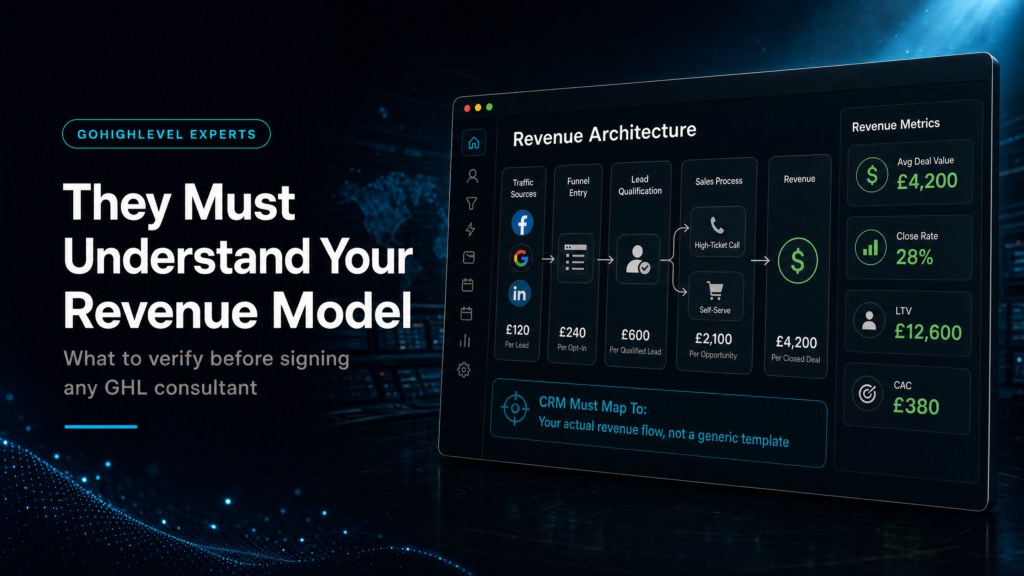
A Go High Level build should reflect revenue mechanics first: offer type, deal value, sales cycle, repeat purchase and the moments where pipeline visibility changes decisions.
If the revenue model depends on cleaner handoffs between CRM records, pipeline stages and follow-up, use the GoHighLevel CRM consolidation guide as the operating-system baseline before you price the build.
Can The Pipeline Prove Revenue Movement?
The CRM should show how buyers move from enquiry to qualified conversation, proposal and closed revenue, not just whether a contact received a message.
What Happens When The Buyer Is Worth Saving?
High-value leads need different recovery logic from low-intent enquiries, so response timing, reminders and human escalation should match commercial value.
Can You See Which Offers Deserve More Budget?
A revenue-aware consultant connects source, offer, pipeline movement and close outcome so your next spend decision is based on margin, not lead count.
A Go High Level consultant who does not understand your revenue model will usually build a tidy CRM that still hides the decisions that make or lose money.
Quick Answer
A Go High Level consultant revenue model check makes sure the build matches how your business actually makes money. Before hiring, confirm the consultant understands offer value, sales stages, follow-up priority, source tracking and reporting so GoHighLevel shows revenue movement rather than generic activity.
Use the Go High Level consultant checklist as the canonical hiring guide, and compare the wider specialist decision with the GoHighLevel expert hub.
TL;DR
- A consultant should map your revenue model before building workflows.
- Pipeline stages should reflect commercial movement, not admin activity.
- Follow-up priority should change when lead value, offer type or sales stage changes.
- Source reporting only matters if it connects to qualified pipeline and closed revenue.
- This is a support article, so it reinforces the consultant canonical rather than competing with it.
Stack This Post With These Related Guides

Before choosing a consultant, read the Go High Level consultant checklist. If the decision is still whether you need specialist ownership at all, compare it with the GoHighLevel expert hiring hub.
Revenue Model Fit Table
| Revenue Question | Weak Build Signal | Better Consultant Answer | Why It Matters |
|---|---|---|---|
| How do you make money? | Every offer gets the same pipeline and nurture. | Stages, fields and follow-up reflect offer value, sales cycle and buying intent. | The CRM shows where revenue is created or delayed. |
| Which leads deserve speed? | All enquiries receive identical response rules. | Lead value, source and stage can trigger priority owner alerts. | High-value opportunities get human attention faster. |
| What should reporting prove? | Dashboards stop at lead volume or booking count. | Reports connect source, qualified pipeline, show rate and closed revenue. | Budget decisions become commercial, not cosmetic. |
| When should automation stop? | Sequences keep running after replies or sales conversations. | Stop rules protect live conversations, opt-outs, bookings and disqualification. | Automation supports the sales process instead of confusing it. |
Why Revenue Model Fit Comes Before Workflow Building
Many GoHighLevel projects start with forms, calendars, funnels and message sequences. Those assets matter, but they should not be the first decision. A consultant needs to understand how the business turns demand into revenue before they decide what the system should automate.
A business selling a high-ticket service does not need the same routing, nurture or reporting as a business selling a low-ticket offer. The build should make that difference visible.
What A Consultant Should Ask Before Touching The CRM
The discovery call should sound commercial. A useful consultant will ask about deal size, sales cycle, owner assignment, lead sources, show rates, quote steps, follow-up gaps and what management needs to see each week.
If the questions stay at the feature level, the build can look polished while still missing the revenue logic that makes GoHighLevel useful.
- Which offers create the best customers?
- Which lead sources create qualified conversations?
- Where do leads currently slow down or disappear?
- Which pipeline stage changes the sales forecast?
How Pipeline Stages Should Reflect Sales Reality
Stages should not be vague labels. They should help the team see whether a buyer has been contacted, booked, showed, received a proposal, accepted, declined or stalled. That structure turns the CRM into a management system.
For sales-specific leakage, use the Go High Level consultant for sales guide alongside this revenue-model check.
Where Revenue Reporting Changes The Build
Good reporting changes what gets built. If the business needs to know which source creates booked calls, then source data needs to be captured early and protected. If the team needs to compare sales reps, ownership and outcome fields must be consistent.
If you are still deciding whether to build this yourself, compare the risk against the Go High Level consultant vs DIY guide.
Conclusion
A Go High Level consultant should not build around software features first. They should build around your revenue model, sales process and reporting decisions.
SCALE’s view is that GoHighLevel becomes valuable when it shows which leads, offers and handoffs produce revenue. That requires cleaner architecture than a generic template can provide.
- Start with offer value and sales cycle.
- Make pipeline stages match real buyer movement.
- Connect source, owner and outcome data before scaling demand.
FAQs
Why should a Go High Level consultant understand my revenue model?
Because the CRM, pipeline, routing and follow-up should match how your business earns revenue. Without that context, the build may track activity but still hide the decisions that affect sales outcomes.
What revenue questions should I ask before hiring a consultant?
Ask how they map deal value, sales cycle, lead source, pipeline stages, owner assignment, show rates, proposal steps and closed revenue inside GoHighLevel.
Is this different from a normal GoHighLevel setup?
Yes. A normal setup can install assets. A revenue-model build connects those assets to commercial movement, sales ownership and management reporting.
Should this post link to the consultant canonical?
Yes. This is a support post, so it should reinforce the main Go High Level consultant checklist rather than compete with it.
