In this guide, we’ll cover:
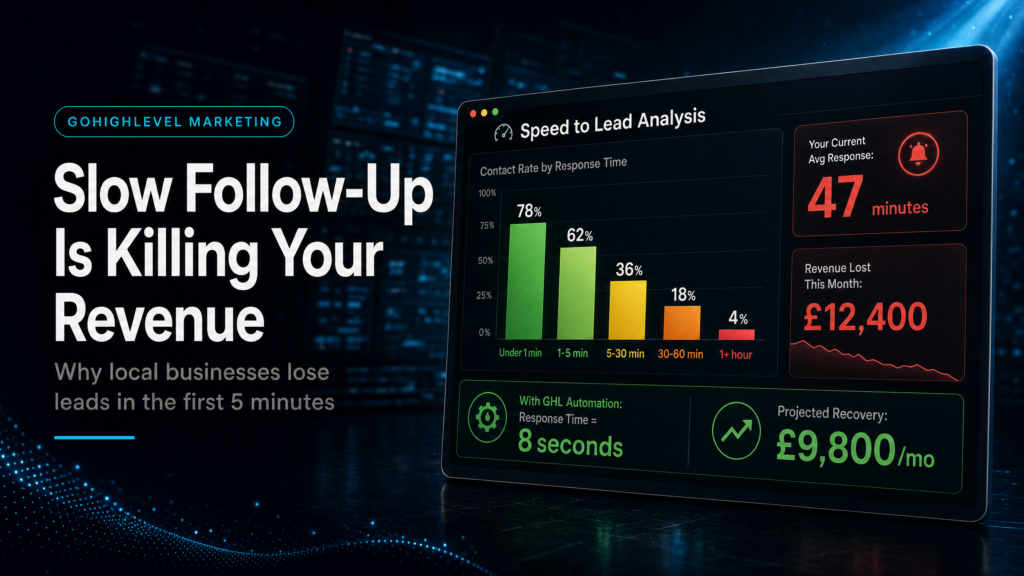
Slow follow-up is one of the simplest Go High Level automation leaks to fix, but it is also one of the fastest ways local businesses lose booked calls and revenue.
This support page feeds the canonical Go High Level automation recovery guide and stays focused on response speed, routing and lead handoff.
Where Leads Go Cold
How form fills, missed calls and messages lose value when nobody responds quickly.
Assign The Right Owner
Why every high-intent lead needs source, status, owner and next action immediately.
Use Follow-Up Without Losing Context
How SMS, email, tasks and stop conditions should support a human sales handoff.
Measure Response Quality
Why response time, booked calls, show rate and pipeline are better signals than message volume.
“A lead that waits too long is not just a follow-up problem. It is paid demand leaking out of the revenue system.”
Quick Answer
Go High Level automation fixes slow follow-up by routing new leads into the right pipeline stage, notifying the right owner, triggering fast SMS/email responses and creating tasks before buyer intent drops.
For local businesses, the goal is not sending more messages. The goal is turning high-intent enquiries into booked calls with faster response, better qualification and cleaner sales visibility.
TL;DR
- Slow follow-up loses revenue because leads cool down before the business responds.
- Go High Level automation should assign owner, source, stage and next action immediately.
- Use SMS/email sequences, but keep stop conditions and human ownership clear.
- Measure first response time, booked-call rate, show rate and pipeline value.
- This page supports the canonical automation recovery guide rather than competing with it.
Slow Follow-Up Fix Table
| Leak | What It Looks Like | Automation Fix | Metric |
|---|---|---|---|
| Missed form speed | New form leads wait hours for the first reply. | Instant owner alert, task and SMS/email acknowledgement. | First response time. |
| No owner | Leads sit in the CRM with no clear person responsible. | Assign owner by source, service, location or pipeline stage. | Unassigned lead count. |
| Generic follow-up | Every lead gets the same message regardless of intent. | Route by enquiry type and qualification fields. | Booked-call rate. |
| No stop condition | Automation keeps sending after a lead books or replies. | Stop sequences on booked call, reply, disqualification or manual takeover. | Reply quality and complaints. |
| Weak reporting | The team cannot see whether faster follow-up created pipeline. | Connect source, stage, booking and opportunity value. | Pipeline value by source. |
Why Slow Follow-Up Costs Local Businesses Revenue
Local service buyers usually contact more than one option. If your business waits too long, the lead may still exist in the CRM, but the buyer has already booked elsewhere. That makes slow follow-up a revenue leak, not just an admin issue.
The fastest improvement is often operational. Every new form fill, missed call or chat message needs the right owner, the right pipeline stage and the right next action before the lead cools down.
Set The CRM Stage Before The Message Sequence
Automation should start with structure. A new enquiry should enter the correct pipeline, keep its source, record the service need and assign a clear owner. Without that foundation, follow-up sequences create activity without accountability.
Go High Level can handle this when forms, calendars, pipelines and workflows are connected properly. The system should show which leads are new, contacted, booked, no-showed, disqualified or won.
Use SMS And Email To Protect The Human Handoff
Fast automated messages help because they acknowledge the enquiry and make the next step clear. But automation should not replace context. It should protect the human handoff by notifying the right person and giving them enough information to respond well.
That means using different follow-up for different lead types. A high-intent booking request, missed call and low-intent download should not all receive the same sequence.
Measure The Result Against Booked Calls
The point of follow-up automation is not message volume. The point is more qualified booked calls, better show rate and clearer pipeline movement. Track how fast the team responds, how many leads book, and which sources produce revenue conversations.
If those numbers improve, the automation is doing its job. If they do not, the issue may be qualification, offer alignment, sales process or tracking rather than message timing.
Conclusion
Slow follow-up is one of the easiest Go High Level automation leaks to see and one of the most expensive to ignore. A lead that waits too long often becomes lost revenue even if the page and form worked.
Start by fixing owner assignment, CRM stage, response timing, booking handoff and attribution. Then measure whether those fixes create more qualified booked calls and pipeline.
FAQs
How does Go High Level automation fix slow follow-up?
It can trigger instant alerts, tasks, SMS/email messages, pipeline updates and owner assignment when a new lead arrives.
What should happen when a new lead submits a form?
The lead should enter the right pipeline, keep source data, assign an owner, trigger follow-up and make the next action clear.
Should every lead get the same follow-up sequence?
No. Follow-up should change based on intent, source, service need, qualification and whether the lead books or replies.
What metric matters most for slow follow-up?
First response time is the first operational metric, but booked-call rate, show rate and pipeline value decide whether the fix is commercial.
How does SCALE approach Go High Level automation?
SCALE connects CRM structure, routing, automations, calendar flow, follow-up and reporting so leads move into sales conversations faster.
