In this guide, we will cover:
This GoHighLevel Facebook Ads follow up guide shows how to route every paid lead into one CRM record, trigger faster responses, book calls and track attribution.
Follow-up only improves revenue when the CRM keeps source data intact. Use the GoHighLevel lead source tracking guide to connect each click, lead owner, booking and revenue outcome.
Own Every Paid Lead
Send every Facebook lead into one CRM record with source, campaign and offer context preserved.
Respond Before Intent Drops
Use tasks, SMS, missed-call recovery and alerts so paid leads do not wait for a manual follow-up.
Turn Clicks Into Conversations
Route qualified leads into booking flow instead of letting them sit as unowned form submissions.
Measure Click-To-Client Quality
Connect campaign, appointment, show rate and revenue so ad spend decisions are based on sales outcomes.
Use the main GoHighLevel Facebook Ads guide first if you are deciding how ads should connect to GHL. This support page focuses on the follow-up system after a click becomes a lead.
Quick Answer
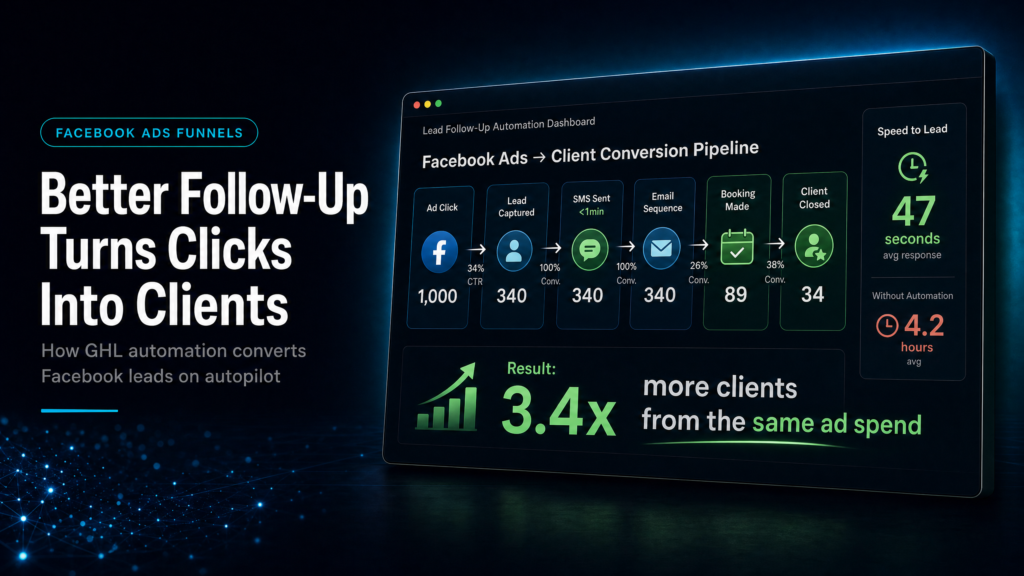
GoHighLevel Facebook Ads follow up works best when every paid click becomes a tracked lead, a fast response task, a booked conversation and a revenue attribution record. The ad account gets the click; GoHighLevel should protect the follow-up and sales handoff.
If your Facebook ads create leads but few clients, the issue is often the post-click system: capture, owner assignment, response speed, booking and reporting.
TL;DR
- Facebook ads do not fail only inside Meta Ads Manager; many fail after the click.
- GoHighLevel should preserve source, campaign and offer context when the lead enters the CRM.
- Fast follow-up is the difference between a paid lead and a lost conversation.
- Booking flow, reminders and pipeline ownership should be connected before scaling spend.
- Report on booked calls, show rate and revenue, not just lead volume.
GoHighLevel Facebook Ads Follow Up Checklist
| Layer | What To Check | Ranking/Revenue Intent |
|---|---|---|
| Lead capture | Every Facebook lead creates one contact record with source and campaign. | Protects paid demand from becoming anonymous CRM noise. |
| Routing | Each new lead has an owner, pipeline stage and next action. | Supports faster sales response and cleaner attribution. |
| Follow-up | SMS, email, task alerts and missed-call recovery trigger quickly. | Stops high-intent leads going cold. |
| Booking | Qualified leads move into a calendar path with reminders. | Turns clicks into conversations. |
| Reporting | Campaign, lead quality, booking, show rate and revenue are visible. | Shows which Facebook campaigns deserve more budget. |
Why Clicks Do Not Automatically Become Clients
Facebook ads can create attention quickly, but attention is fragile. If the lead waits, gets routed to the wrong person or receives a generic message, the ad spend leaks before sales even starts.
GoHighLevel helps when the post-click path is built deliberately. The lead should arrive with source context, move into the correct pipeline and trigger follow-up while the buyer still remembers the offer.
For campaign-side settings, use Meta’s official Business Help Center; this guide focuses on the follow-up system after the lead reaches GoHighLevel.
Keep Campaign Context Attached To The Lead
Useful reporting starts at the moment of capture. The CRM should show which ad, form, offer and source created the enquiry. Without that, the business cannot separate profitable campaigns from noisy lead volume.
This is where many paid funnels fail. They count forms but lose the context needed to judge quality, booking rate and revenue.
Route Paid Leads To A Real Owner
A paid lead should not be an unassigned notification. It needs a pipeline stage, an owner and a next action. That could be a call task, SMS, booking link or qualification step.
The system should make the next step obvious. Therefore, the team spends less time finding leads and more time converting the ones worth pursuing.
Use Automation To Support The Human Handoff
Automation should never hide poor process. It should speed up the first response, confirm the lead is in the right place and keep reminders moving until a person takes over.
For high-ticket or local service offers, that means GoHighLevel should support a fast human handoff rather than pretending every lead can be closed by messages alone.
Measure Booked Calls And Revenue
The best Facebook ad setup is not the one with the cheapest lead. It is the one that produces booked calls, show-ups and revenue at a cost the business can scale.
SCALE builds GoHighLevel systems around that path. The aim is clearer lead ownership, faster follow-up and reporting that connects Facebook clicks to client outcomes.
Conclusion
GoHighLevel Facebook Ads performance improves when the post-click system is tight. Capture the lead, preserve campaign context, route it quickly, support the follow-up and measure what turns into real sales activity.
If Facebook ads are generating leads but not enough clients, do not only change the ad creative. Fix the CRM, follow-up and booking path that decides whether those paid clicks become conversations.
FAQs
Can GoHighLevel improve Facebook ads results?
Yes, when it improves the post-click path. GoHighLevel can preserve source data, route leads, trigger fast follow-up, support bookings and show which campaigns produce revenue.
What should be tracked from Facebook ads inside GoHighLevel?
Track source, campaign, offer, contact record, pipeline stage, first response, booked call, show rate and revenue. Those signals matter more than raw lead count.
Why are my Facebook ad leads not turning into clients?
Common causes include slow response, unclear ownership, weak booking flow, poor qualification and no attribution from lead to revenue.
Watch the official GoHighLevel strategy video below.
