
In This Guide, We’ll Cover:
Each step below shows where the commercial result is won or lost before the reader commits to a new system.
SPEED
How Fast Does The First Touch Fire?
A lead that waits even a few minutes is already comparing you with faster competitors.
OWNERSHIP
Who Is Responsible Right Now?
Automated follow-up fails when the system does not assign the right owner, stage and escalation path.
SEQUENCE
What Happens If They Do Not Reply?
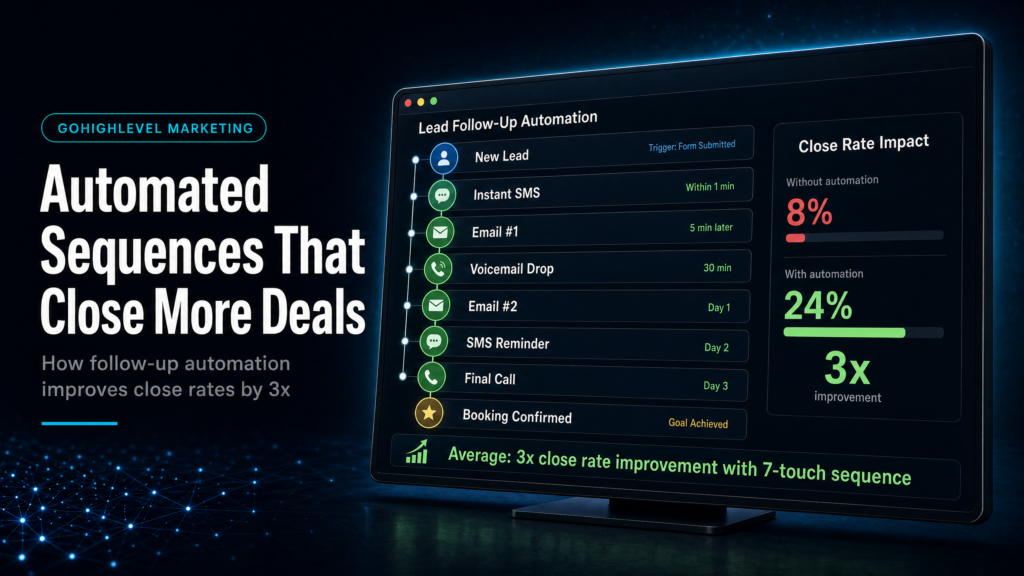
The best sequences mix helpful reminders, channel changes and stop rules instead of spamming every contact.
VISIBILITY
Can Sales See The Leak?
Pipeline reporting should reveal where leads reply, book, show, stall or close so the business can fix the right step.
“Fast follow-up is not a reminder problem. It is a revenue-control problem.”
Quick Answer
GoHighLevel lead follow up improves close rates by removing delay, routing every enquiry to the right pipeline stage, and triggering SMS, email, call tasks and escalations immediately. The sequence should feel helpful, stop when the lead responds, and give sales clear visibility into booked calls, show rates and revenue.
TL;DR
- If first response takes longer than five minutes, automation should handle the first touch and alert the owner.
- Follow-up sequences need pipeline stages and stop conditions before copywriting matters.
- Use SMS, email and call tasks together so one missed channel does not kill the opportunity.
- Track reply, booking, show and close rates so the system improves from revenue data.
Lead Follow-Up Sequence Decision Table
| Leak | What is happening | Best GoHighLevel fix |
|---|---|---|
| Slow first response | The lead submits a form but waits for a manual reply. | Trigger instant SMS/email, create a call task and notify the owner. |
| No clear ownership | Multiple people assume someone else is following up. | Assign owner by source, service, territory or pipeline stage. |
| Too much automation | The lead replies but still receives generic reminders. | Add stop conditions, reply detection and stage-based branching. |
Why Lead Follow-Up Breaks In Growing Teams
Most teams do not lose leads because they lack effort. They lose leads because the process depends on people remembering every handoff while new enquiries, calls and admin tasks compete for attention. When the issue is bigger than one follow-up sequence, use the Go High Level automation recovery guide to connect routing, ownership, stop rules and reporting before adding more messages.
GoHighLevel fixes that when the automation is built around the sales process. New leads should enter the correct pipeline, trigger the correct first touch and show the owner what has already happened.
What A Strong Automated Sequence Includes
The first message should confirm context, remind the lead why they enquired and make the next action easy. Then the sequence should switch between SMS, email and call tasks based on whether the lead replies or books.
Strong sequences also know when to stop. If someone responds, books or becomes unqualified, the system should update the stage and prevent irrelevant messages from continuing.
How To Judge Whether It Is Working
Measure first-response time, reply rate, booked-call rate, show rate, opportunity value and close rate by source. That view shows whether the follow-up system is improving revenue or just increasing activity.
If a paid campaign creates leads that reply but do not book, the sequence probably needs a better offer bridge. If they book but do not show, reminders and calendar confirmation need work.
Done For You
Audit Your Lead Follow-Up System
If your leads arrive but do not turn into enough booked calls, SCALE can inspect the CRM, pipeline, automations and attribution path before you spend more on traffic.
Conclusion
GoHighLevel lead follow-up works when the system handles speed, ownership, reminders and reporting together. A sequence alone is not enough if the pipeline and sales process are unclear.
SCALE’s perspective is that speed-to-lead should be treated as a core revenue system. The faster the handoff, the cleaner the pipeline data, and the easier it becomes to scale the traffic that produces real opportunities.
FAQs
How quickly should GoHighLevel follow up with a lead?
The first touch should usually happen immediately, with owner alerts and call tasks created within the first few minutes.
Should follow-up use SMS or email?
Use both where consent and compliance allow. SMS is fast, email carries detail, and call tasks keep sales accountable.
What makes a sequence feel too automated?
It feels too automated when it ignores replies, sends irrelevant reminders or keeps pushing a call after the lead has already taken action.
When should a GoHighLevel expert build this?
Bring in expert help when the CRM, calendar, pipeline, automations and reporting all need to work together before traffic is scaled.
